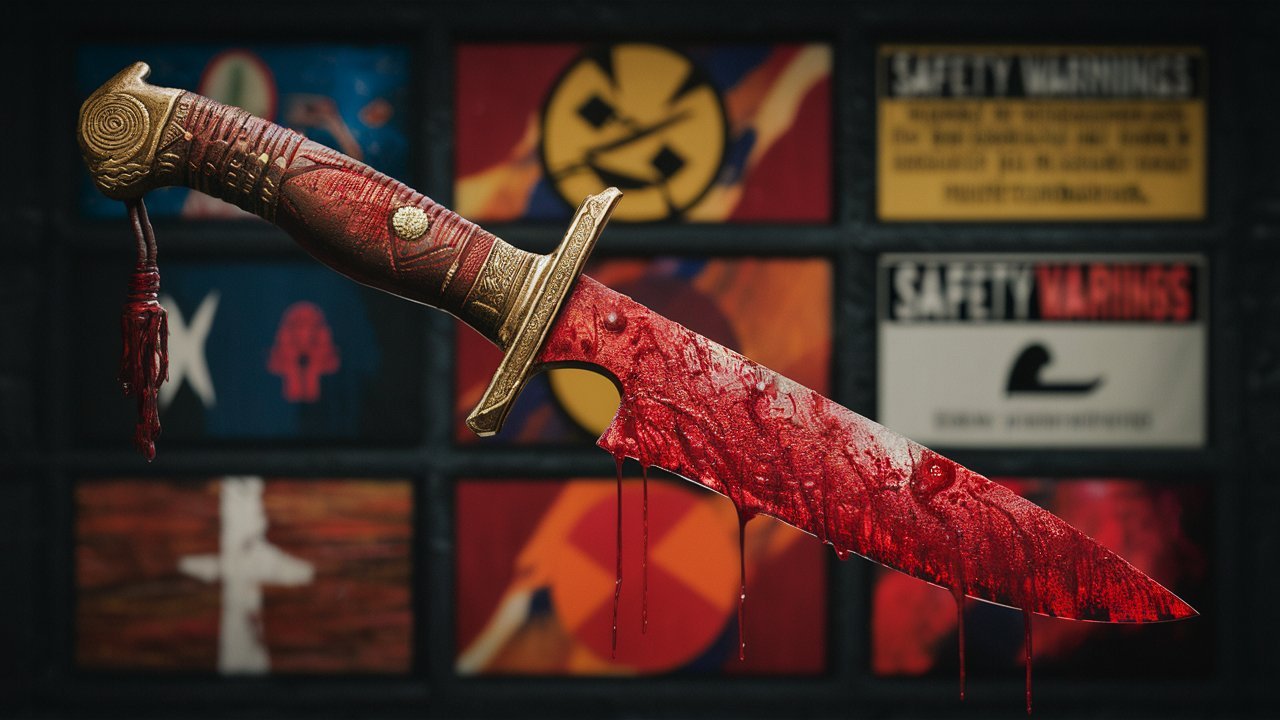
The phrase bloody knife carries powerful emotional and symbolic weight, often appearing in news reports, crime fiction, art, cinema, and historical discussions. We encounter the term across many contexts, from metaphorical language that conveys betrayal or violence to factual references in journalism and legal proceedings. Understanding what a bloody knife represents requires a careful and responsible examination of its meanings, cultural usage, and real-world implications. This article provides a comprehensive, informative, and non-sensational exploration of the term bloody knife, focusing on symbolism, media representation, historical relevance, forensic context, and public safety awareness.
What Does “Bloody Knife” Mean in Language and Context
The keyword bloody knife can be interpreted both literally and figuratively. Literally, it refers to a knife stained with blood, often associated with an injury or violent incident. Figuratively, it is commonly used to symbolize guilt, betrayal, or conflict in literature and speech. We see the phrase employed to evoke strong emotional responses without needing detailed explanation, which makes it a potent linguistic device. The meaning always depends on context, whether it appears in a legal document, a fictional narrative, or a metaphorical discussion.
Bloody Knife Symbolism in Literature and Art
In literature and visual art, the bloody knife is a recurring symbol representing moral consequence, irreversible action, or internal conflict. Writers and artists often use this image to communicate themes of remorse, justice, revenge, or tragedy. We observe its presence in classic drama, modern novels, and symbolic paintings, where the object itself becomes secondary to what it represents emotionally. This symbolism allows creators to explore human psychology and ethical dilemmas without explicit description, making the bloody knife a powerful narrative tool.
Bloody Knife in Film, Television, and Popular Media
The bloody knife frequently appears in films and television series, particularly within crime, thriller, and mystery genres. In these settings, it often functions as visual shorthand for danger, wrongdoing, or unresolved tension. Directors use the image to advance plot development or to signal critical turning points in a story. We also see the term referenced in media headlines, where it serves to capture attention and convey seriousness. Responsible media portrayal avoids unnecessary sensationalism while still communicating the gravity of events.
Historical References to the Bloody Knife
Throughout history, the bloody knife has appeared in accounts of conflicts, assassinations, and pivotal moments of political or social upheaval. Historical records often describe weapons symbolically rather than graphically, using phrases like bloody knife to emphasize the consequences of violence rather than the act itself. We study these references to understand past conflicts, societal norms, and the evolution of justice systems. In this context, the term helps historians convey impact while maintaining narrative restraint.
Bloody Knife in Forensic and Legal Discussions
In forensic science and legal contexts, a bloody knife is treated as physical evidence rather than a symbol. It may be referenced in court proceedings, investigative reports, or academic studies related to criminal justice. We approach this subject from an educational perspective, recognizing the importance of evidence handling, chain of custody, and analytical methods used by professionals. Discussions in this domain focus on objectivity, accuracy, and ethical responsibility, ensuring that the term is used with precision and care.
Psychological Impact of Violent Imagery
The phrase bloody knife can evoke strong psychological reactions due to its association with harm and danger. We acknowledge that exposure to violent imagery or language may affect individuals differently, depending on personal experiences and sensitivities. Understanding this impact encourages more thoughtful communication in media, education, and public discourse. By addressing the psychological dimension, we promote awareness and empathy while discussing challenging topics responsibly.
Public Safety and Awareness Related to Sharp Objects
From a public safety standpoint, discussions involving a bloody knife highlight the importance of injury prevention and responsible behavior. We emphasize safety awareness, proper handling of sharp tools in everyday settings, and the value of conflict prevention. Educational conversations focus on reducing harm, encouraging safe environments, and supporting community initiatives that address violence through prevention rather than reaction. This perspective ensures that the topic contributes to awareness rather than fear.
Ethical Considerations When Discussing Violent Terms
Using terms like bloody knife carries ethical responsibility, especially in educational or informational content. We strive to present facts without glorification or sensationalism. Ethical communication prioritizes clarity, respect for affected individuals, and a focus on learning outcomes. By maintaining a measured tone, discussions can inform readers while discouraging harmful interpretations or misuse of violent imagery.
Conclusion: Understanding the Meaning Behind “Bloody Knife”
The term bloody knife is layered with meaning, spanning symbolism, culture, history, and factual discourse. Whether encountered in literature, media, or academic discussion, it represents more than an object—it reflects human emotion, conflict, and consequence. By examining the phrase thoughtfully and responsibly, we gain insight into how language shapes perception and how society interprets signs of violence. A balanced understanding helps us engage with complex topics in a way that informs, educates, and promotes awareness.
Frequently Asked Questions About Bloody Knife
What does the term bloody knife usually symbolize?
It often symbolizes guilt, conflict, betrayal, or the consequences of violent action, especially in literature and media.
Is bloody knife always meant literally?
No, the term can be literal or metaphorical depending on context, particularly in artistic or narrative usage.
Why is the bloody knife a common image in movies and books?
It serves as a powerful visual or symbolic device that quickly conveys danger, tension, or moral consequence.
How is a bloody knife treated in legal contexts?
In legal and forensic discussions, it is referenced objectively as evidence, with strict attention to procedure and accuracy.
Why is it important to discuss such terms responsibly?
Responsible discussion helps inform audiences without promoting fear, harm, or sensationalism, encouraging awareness and ethical communication.